



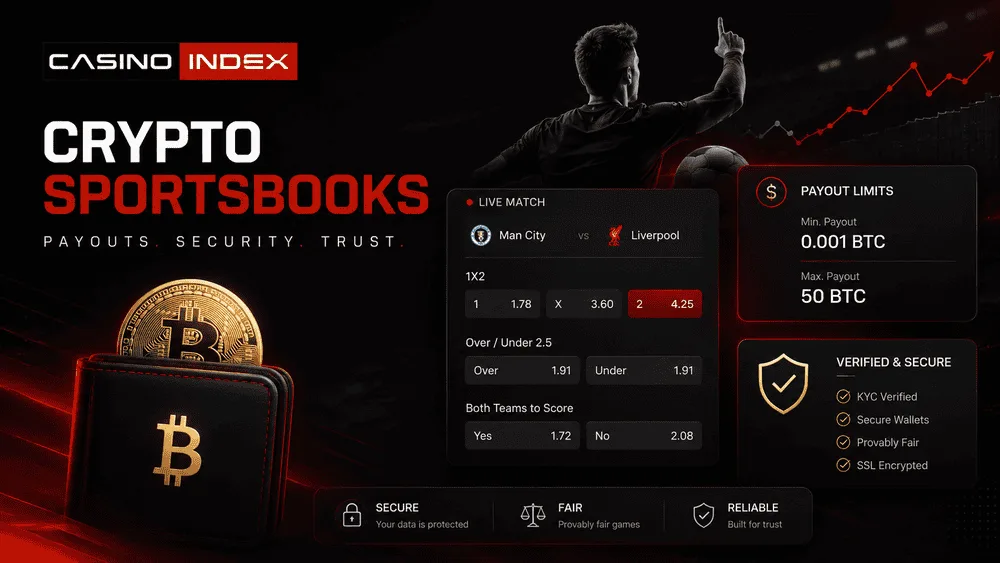
Sports bettors are trained to chase better numbers.
A small difference in price can matter. A better spread can change the value of a wager. A stronger moneyline can improve long-term expected return. Bettors compare markets, follow line movement and look for sportsbooks that offer better pricing before kickoff.
But many bettors still ignore a different number that can matter just as much after they win: the payout limit.
That becomes especially important at crypto sportsbooks.
Crypto betting can make deposits faster. It can reduce some banking friction. It can also give bettors more payment flexibility than traditional cards or bank transfers. But it does not remove the sportsbook’s control over withdrawals.
A blockchain transaction may move quickly once approved. The sportsbook still decides when approval happens.
That distinction is where payout trust starts.
A bettor may find sharp odds, place a winning wager and then discover daily withdrawal caps, manual reviews, wallet checks or verification requirements that were not obvious before deposit. In that situation, the value of the odds becomes less important than the ability to access winnings without unnecessary friction.
For serious bettors, odds and payout rules should be judged together.
A Better Line Does Not Always Mean Better Value
Line shopping is part of smart betting.
If one sportsbook offers a better price than another, bettors naturally pay attention. Over time, small pricing differences can add up. That logic is sound.
The problem is that odds are only one part of the betting experience.
A sportsbook may offer a slightly better line but weaker withdrawal terms. It may promote high limits on popular markets while applying low payout caps after a win. It may support crypto deposits but still require manual approval before funds leave the account.
That does not automatically make the operator unsafe. It does mean the bettor needs to understand the full value equation.
A recreational bettor may care most about ease of use, market coverage and payment convenience. A bettor staking larger amounts should care more about withdrawal caps, verification rules and how the sportsbook handles bigger wins.
A stronger price is useful only if the bettor can use the sportsbook comfortably after winning.
This is why payout limits deserve the same attention as odds. If bettors compare line value but ignore cashout rules, they may be judging only the front half of the experience.
Betting Limits and Withdrawal Limits Are Connected
Sports bettors already understand betting limits.
A book may limit how much can be placed on a market. Limits may vary by sport, league, event, bet type or player profile. A major football game may support higher stakes than a smaller niche market. A pre-match wager may have different limits than a live bet.
Withdrawal limits work differently, but they affect the same core question: how practical is the sportsbook for the bettor’s bankroll?
A site can allow a player to build a large balance but restrict how quickly funds can be withdrawn. Daily, weekly or monthly withdrawal caps can turn a big win into a long payout schedule. That may be acceptable if the terms are clear. It becomes a trust issue when limits are hard to find or appear only after the player requests a withdrawal.
Bettors should check both sides before depositing.
How much can be bet?
How much can be withdrawn?
How long does approval take?
Do larger withdrawals trigger extra review?
Does the payment method affect the limit?
These questions define whether the sportsbook fits the bettor’s risk level and bankroll size.
A sportsbook with good odds but poor payout structure may still be a poor match for serious bettors.
Crypto Deposits Are Fast, but Approval Still Belongs to the Sportsbook
Crypto payments can be fast, but sportsbook approval is not the same as blockchain settlement.
This is one of the most common misunderstandings in crypto betting.
A bettor may see that a sportsbook supports Bitcoin, Litecoin, USDT, USDC or another coin and assume withdrawals will always move quickly. Sometimes they do. But the actual process has two stages.
First, the sportsbook must approve the withdrawal.
Second, the transaction must move on-chain.
Network speed only affects the second stage. The first stage remains under the operator’s control.
That means a crypto sportsbook can advertise fast payments while still applying manual approval before release. Those checks may include account review, wallet ownership confirmation, KYC, payment matching, source-of-funds questions or bet settlement review.
Some checks are legitimate. Operators may need to prevent fraud, meet compliance requirements or review unusual activity. The UK Gambling Commission’s remote gambling and software technical standards show how regulators can address areas such as customer account information, game rules, result determination and player-facing information.
The key issue is not whether checks exist. It is whether the sportsbook explains them clearly before the bettor deposits.
Fast crypto rails do not fix vague cashout rules. They only make the payment technology faster after the operator has already approved the payout.
Big Wins Can Trigger More Scrutiny
Small withdrawals often move more smoothly than larger ones.
That is not unique to crypto betting. Traditional sportsbooks and online casinos may also apply closer review when a player requests a larger payout. But crypto adds extra layers because wallets, networks and payment origins can become part of the review.
A larger win may trigger manual approval. The sportsbook may ask for identity documents. It may request proof that the withdrawal wallet belongs to the account holder. It may review the betting activity that created the balance. It may also examine whether the player used restricted methods, a VPN, duplicate accounts or patterns that violate terms.
None of this automatically means the sportsbook is acting unfairly.
The problem appears when the bettor had no reasonable warning that these checks could happen.
A strong operator sets expectations early. It explains that larger withdrawals may require review. It states whether identity verification can apply before payout. It gives practical information about payment ownership, supported networks and withdrawal timing.
A weaker operator relies on broad terms. It may say that it can request any documents at any time without giving a normal process. It may promote fast withdrawals but leave review triggers unclear.
For bettors, the risk is not only delay. It is uncertainty.
What Bettors Should Check Before Depositing
Bettors do not need to inspect every sportsbook like a regulator. They should check the points that usually affect real-money outcomes.
First, check withdrawal limits. The sportsbook should explain minimum and maximum withdrawals, daily or monthly caps and whether limits vary by payment method.
Second, check approval times. A useful cashier page should separate estimated processing time from blockchain settlement time. If everything is described only as “instant,” bettors should read the terms more carefully.
Third, check verification rules. The operator should explain whether KYC may be requested before withdrawal, what documents may be needed and whether larger payouts trigger extra checks.
Fourth, check wallet and network rules. Crypto bettors should confirm supported coins, supported chains and whether the withdrawal wallet must match deposit history or account ownership.
Fifth, check betting restrictions. Terms around arbitrage, syndicate betting, multiple accounts, VPN use and irregular betting patterns can affect serious bettors more than casual users.
Sixth, check complaint patterns. One negative review does not prove a sportsbook is unsafe. Repeated reports about delayed payouts, blocked accounts or changing document requests deserve more attention.
These checks do not remove all risk. They reduce surprise.
The bettor who understands payout rules before placing a wager is in a stronger position than the bettor who only checks the odds.
Why Authority and Player Protection Still Matter
Payout trust is not only a payment issue. It also connects to licensing, dispute handling and player protection.
A licensed operator is not automatically perfect. But licensing can create clearer standards, oversight and possible complaint routes. Bettors should check who operates the sportsbook, which regulator applies and whether the license information is easy to verify.
Player protection also matters. Fast deposits, high limits and crypto access can create risk if players do not manage bankrolls carefully. The National Council on Problem Gambling provides responsible gambling resources for people who want to understand warning signs, limits and support options.
Serious bettors should not treat responsible gambling tools as an afterthought. Deposit limits, time-outs, self-exclusion tools and account controls can matter even for experienced players.
A sportsbook that explains these tools clearly is usually showing more operational maturity than one that only promotes deposits, markets and rewards.
Better Crypto Sportsbooks Make Limits Clear Early
The better crypto sportsbooks do not rely only on supported coins or fast deposit claims.
They explain how betting, settlement and withdrawals work. They make limits visible. They separate network speed from internal approval time. They give practical information about verification. They avoid making payout claims sound simpler than the real process.
Bettors comparing crypto sportsbooks should look beyond line value and check how each operator handles larger wins, account reviews and payout timing.
That is especially important because crypto bettors are not all the same.
Some want speed. Some want stablecoin support. Some want privacy. Some want high limits. Some want broad sports coverage. Some care most about withdrawals after larger wins.
A sportsbook that fits one bettor may not fit another. The strongest option is not always the loudest brand or the site with the most promoted markets. It is the one that matches the bettor’s bankroll, risk tolerance and cashout expectations.
This is where resources comparing crypto sportsbooks that balance odds, limits and withdrawal rules can support better decision-making before funds are committed.
Complaint Patterns Are More Useful Than Isolated Claims
Sports betting always creates disputes.
Some bettors misunderstand settlement rules. Some lose and blame the book. Some complaints lack evidence. Others reveal real operational problems.
The useful approach is to look for patterns.
Repeated complaints about delayed withdrawals matter more than one angry review. Several reports of sudden verification after big wins deserve attention. Similar claims about blocked accounts, vague support replies or changing document requests can show a deeper issue.
Bettors should read complaints carefully.
A complaint with dates, amounts, screenshots and support responses is more useful than a vague accusation. A sportsbook that replies clearly and resolves issues deserves different treatment from one that ignores repeated payout concerns.
Complaint history should not be the only trust signal. It should sit beside licensing, withdrawal terms, verification policy, market limits and support quality.
The goal is not to prove every complaint true. The goal is to understand whether the same problem appears often enough to change the risk profile.
Reliable Cashouts Are Part of Betting Value
Sports bettors already know that price matters. But odds are not the full story.
A better line has limited value if the sportsbook makes withdrawals difficult. A wide market list matters less if large wins trigger unclear reviews. Fast crypto deposits are useful, but they do not guarantee fast cashouts.
Payout limits are not boring fine print. They are part of the betting product.
Before trusting a crypto sportsbook, bettors should check the cashout path with the same seriousness they bring to odds, spreads and market selection.
The best betting decision is not only about where the number is better. It is also about where the bettor can withdraw fairly when the result goes their way.