


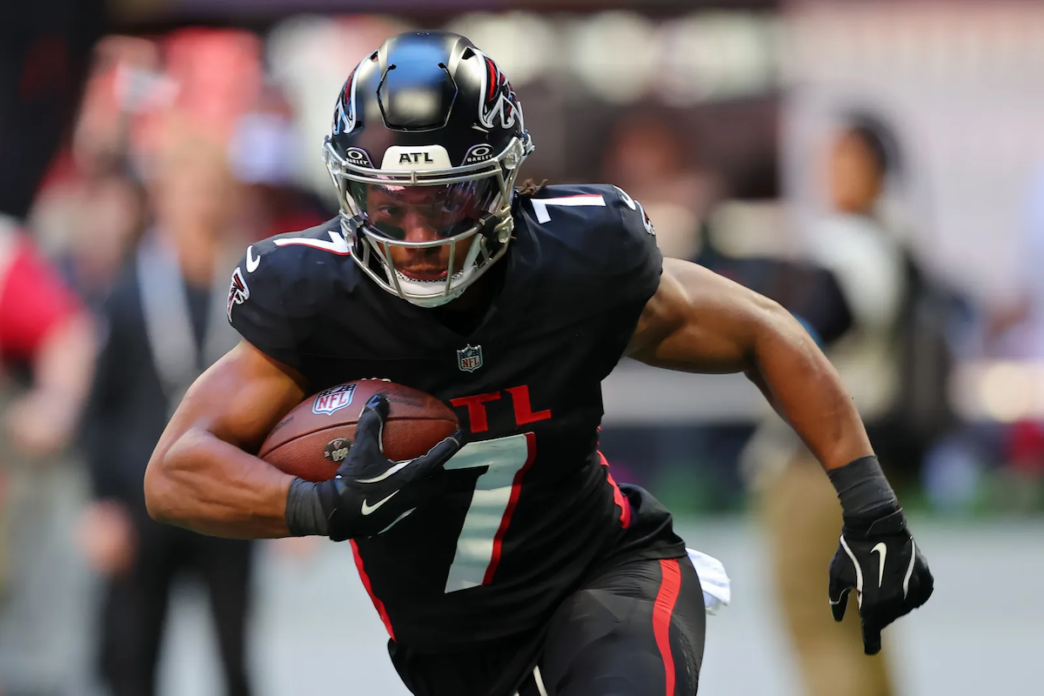
For most of the past decade, the running back position has been the single biggest battlefield in fantasy football strategy. Managers argue every summer about Zero-RB versus Hero-RB, about ADP versus projected workload, and about whether loading up on receivers in the first three rounds leaves you too thin where it counts. In 2026, one player has collapsed that entire debate into a single name. Bijan Robinson is the consensus top overall pick in most early mock drafts, and the case for him is not complicated. He finished last season as the RB2 in fantasy points per game according to ESPN’s fantasy rankings, accumulated 820 receiving yards, and carried the offense through a coaching staff that was limiting his goalline role. That limiter is now gone.
Tyler Allgeier, who collected eight rushing touchdowns on red-zone work that by any objective measure should have belonged to Robinson, is no longer on the roster. Brian Robinson has taken that spot, and the gap in pure receiving ability and open-field threat between the two backs is not marginal. It is generational. The deeper change, the one that separates Robinson’s 2026 outlook from anything he has produced before, is the man now running the operation in Flowery Branch.
What Stefanski Changes on the Ground
Kevin Stefanski was named head coach of the Atlanta Falcons in January 2026, succeeding Raheem Morris after the Falcons closed the 2025 season on a four-game winning streak. Stefanski arrives as a two-time AP NFL Coach of the Year with a specific track record of transforming running backs into complete offensive weapons. His time in Cleveland demonstrated what happens when an elite back receives both the volume and the red-zone priority that his skillset demands. In his two peak seasons with the Browns, Nick Chubb ranked fourth in the league in carries and second among running backs in yards per carry. Stefanski’s offense did not just use Chubb, it built around him in ways that made the surrounding cast better. The parallel to Robinson’s situation is direct, and it is confirmed: Stefanski met with Robinson during the offseason transition and Robinson himself noted that Stefanski already has a clear vision and knows how to utilize every player for their specific skillset.
One analyst noted: “Robinson’s 49.3 percent red-zone rushing share last year was a product of scheme, not ability. You don’t run an offense through a back who produces at that level and then hand the goalline to someone else. That was always the piece holding the ceiling down. It’s been removed.”
Where the Prop Market Is Leaving Value on the Table
The fantasy betting market and the season-long prop market are not the same thing, but they move on similar information, and right now both have a gap. Robinson’s rushing touchdown prop for 2026 opened at 9.5 at most major books. That number reflects a mild uptick from his 2025 total but does not fully price in the red-zone role change. In Stefanski’s most functional Cleveland seasons, the featured back was the primary goalline option by a wide margin. If Robinson absorbs even 65 percent of Atlanta’s red-zone rushing attempts, a figure well below the share Chubb commanded in Cleveland, the 9.5 line becomes thin.
There is a secondary dimension here that prop bettors often ignore: receiver usage. Robinson ran 102 targets through the Atlanta passing game last season, second among all running backs. In Stefanski’s Cleveland system, the featured back consistently appeared in the short-to-intermediate passing game as a check-down and screen option. That volume tends to hold or increase, not contract. A back who finishes top-two in targets and then moves into a system that has historically maintained or expanded that role for its featured back is carrying an unusual combination of floor and ceiling.
Speaking to RotoWire, the independent platform covering the 2026 fantasy football draft kit and preparation tools and real-time sports data, one analyst noted: “For a situation like Robinson’s, where the coaching change is the central variable and the system transition is still settling, live ADP tracking and depth chart feeds are what separate a position from a guess. The minicamp data coming out of Atlanta right now is moving projections.”
The Fantasy Draft Preparation Problem
The timing of the 2026 offseason creates an interesting preparation window. NFL mandatory minicamps are running this week, with Atlanta’s OTA sessions ongoing through mid-June. That means depth chart decisions, quarterback competition outcomes, and early usage signals are still emerging. Fantasy managers who go into their drafts without live data from this period are working from stale projections. That is where a proper research process separates the managers who win from those who rely on static preseason lists.
The draft strategy debate around Robinson is not really about him at all. It is about Jahmyr Gibbs. Detroit’s back offers a comparable receiving profile in a higher-scoring offense, and with David Montgomery gone, Gibbs absorbs a larger share of the Lions’ offense than he held in previous seasons. Head coach Dan Campbell has spoken publicly about leaning on Gibbs more heavily in 2026. The Gibbs camp argues that Detroit’s offense is simply more explosive and that the ceiling on passing-game volume makes him the better first-overall target in PPR formats.
Robinson’s counter-argument runs through the red zone. Detroit’s offense scores at a high rate, but Gibbs has historically not been the primary beneficiary of that scoring volume on the ground. Campbell’s rushing-touchdown distribution has leaned on the lead back more than under previous coordinators, but the pattern is less established than what Stefanski built in Cleveland. According to the NFL’s official statistical records, Robinson ranked inside the top five running backs in receiving yards in 2025, a profile that fits Stefanski’s system precisely. Robinson, under a coach whose system is tailor-made for a complete three-down back, carries the higher touchdown probability floor. That combination of targets, carries, and red-zone priority is why multiple consensus ranking systems have him at or near 1.01 entering the summer.
What the Betting Market Tells Fantasy Managers
Robinson’s situation at Atlanta is not analogous to a lateral move. It is a systemic upgrade from a staff that was actively suppressing his scoring upside to one that, based on historical precedent, will maximize it. The rushing touchdown prop and the receiving yards total both carry value for bettors who are prepared to do the research before July moves those lines. For further coverage of how the 2026 NFL offseason is reshaping the skill-position prop market, TheSpread’s NFL offseason analysis has tracked how coaching changes are creating unusual opportunities in opening lines.
One supporter who has followed the Falcons through multiple coaching cycles said: “Every year the analytics get better at identifying which backs are undervalued by the system they are in. Robinson was a case study in that for two years running. Stefanski doesn’t make that mistake. He built his reputation on letting the back be the back.”
With training camps opening in late July and preseason games providing the first live data on Robinson’s role in the new scheme, the next six weeks represent the clearest opportunity to act on this information. The 1.01 debate will dominate fantasy content through August. The prop market will adjust as Stefanski’s system becomes clearer. The window to take a position ahead of those corrections is now.