







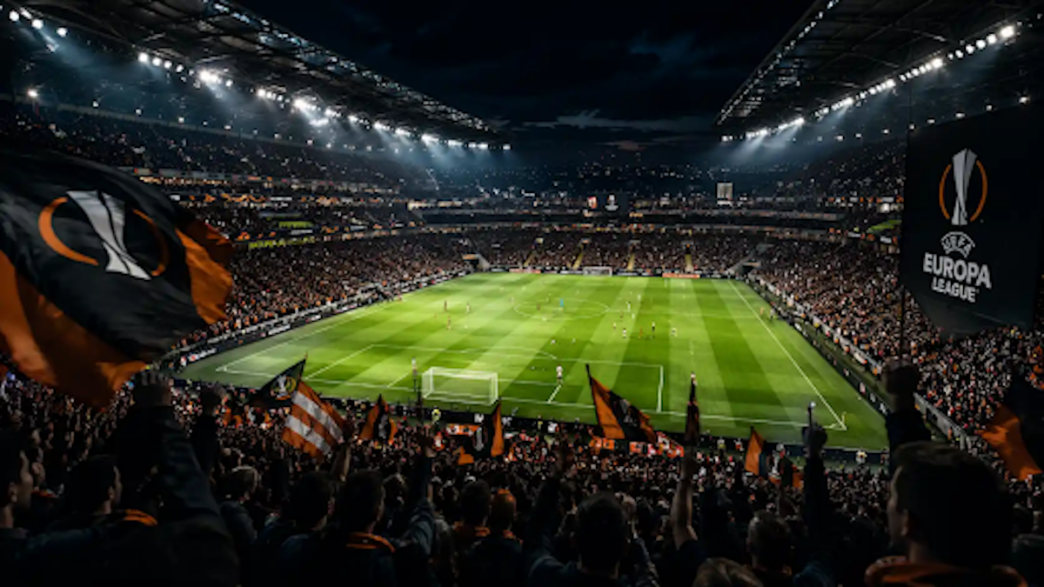
The UEFA Europa League occupies a distinct and often underappreciated position in football betting. It sits below the Champions League in prestige but above domestic cup competitions in European significance, which creates a distinct set of participant motivations, squad management decisions, and match dynamics that are genuinely different from those of other competitions. Understanding those specific characteristics is what allows bettors to approach Europa League fixtures with greater precision than treating them like slightly less prestigious Champions League games.
The Europa League field is more diverse than the Champions League in the most analytically important sense: the quality range between participants is wider. The competition includes technically sophisticated clubs from major European leagues who have qualified through domestic performance, clubs that have dropped from the Champions League group stage, and clubs for whom European competition is a less routine experience. This diversity creates predictable quality differentials that can be more exploitable than the closer quality range of Champions League competition.
If you’re making predictions for Europa League matches, check out betting tips by Repcet they offer soccer predictions that take into account both general information about team form and the specific characteristics of the tournament. Free Football Predictions for Europa League matches are most useful when they address each participating club’s squad management philosophy and whether the competition is a genuine priority or a secondary objective.
Squad Rotation and Its Europa League Significance
Squad rotation is more prevalent and more drastic in the Europa League than in any other major European club competition. English, Spanish, and German clubs regularly use the Europa League to give squad players meaningful match time, particularly in the group stage. This means that the team that appears in their most recent league match may bear little resemblance to the lineup fielded in the Thursday night Europa League fixture.
When Top Clubs Prioritize the Trophy
A meaningful exception to the rotation pattern occurs when a club from a major league reaches the knockout rounds and begins to see the Europa League as a genuine trophy opportunity. Arsenal, Manchester United, and similar clubs have at different points shifted from rotation mode to first-choice priority in the Europa League, and identifying this shift is important because it fundamentally changes the predictive context. A rotated side in the group stage becomes a full-strength contender in the quarter-finals, and their odds should be assessed accordingly.
Clubs for Whom Europe Is a Priority from the Start
For clubs from smaller leagues competing in European competition for the first time or infrequently, the Europa League is often the biggest competitive platform they have access to. These clubs typically field their strongest available lineup in every European match and prepare specifically for each opponent, in a way their domestic routine does not require. The contrast between their full commitment and the rotation policies of major league opponents can create underdog opportunities that the market does not always price accurately.
Goals Markets in the Europa League Football
Europa League matches tend to be slightly higher-scoring than Champions League knockout football because the tactical conservatism that characterizes the highest-stakes European ties is less pronounced. The diversity of tactical approaches between participants from different leagues also creates more unpredictable tactical clashes that can produce open matches. Over goals markets in Europa League fixtures involving clubs known for attacking football can be more reliably productive than in the cautious world of Champions League knockout competition.
Home Advantage in European Competition
European home matches tend to produce stronger home advantage effects than domestic fixtures because the visiting team must travel to an unfamiliar environment, often in different time zones or climatic conditions, and face a crowd whose familiarity with a rare European fixture creates unusual intensity. Clubs playing their first European home match in years often deliver exceptional home performances, driven by the heightened atmosphere.
Conference League: The Additional Tier
The UEFA Conference League, introduced as a third tier of European competition, extends European football further down the quality range. Prediction principles that apply to the Europa League apply here with greater extremes: the quality range is wider, rotation is more common among clubs that view it as a lower priority, and the gap between participants from different footballing cultures is larger. These extremes create both more predictable quality differentials and more frequent surprises from committed underdogs.
Conclusion
Europa League predictions reward an understanding of the competition’s specific dynamics rather than simply applying Champions League or domestic league analysis without adjustment. Squad rotation policies, the varying priority clubs assign to the competition, and the quality range between participants all create distinctive patterns that careful research can identify and apply productively in both standard and specialist markets.