




Last Updated on February 10, 2026 10:33 am by admin
The NBA 2025–26 season has reached the stage where the hierarchy is starting to take shape, without being fully locked in yet. This is the perfect moment to look ahead: not a prediction tied to “last night’s game,” but an analysis based on team structure, roster depth, defensive reliability, and medium-term consistency. In recent months, public interest has also grown beyond the court: between talk shows, social media breakdowns, fan communities, and activities like nba betting, fantasy basketball, statistical projections, and odds comparison platforms, the conversation is increasingly driven by scenarios and trends rather than single results.
Why the Regular Season Isn’t Enough: Playoffs Reward Teams That Can Transform
To understand who can truly win the championship, you have to separate “good teams” from “playoff teams.” The regular season rewards consistency and management, but the playoffs are a different environment: slower pace, tougher physicality, opponents preparing specific counters, and every weakness being exposed. The teams that go all the way usually have a strong defensive identity and an offense that doesn’t rely only on transition or a hot three-point night.
Thunder and Nuggets: Different Teams, Same Advantage When It Matters
Oklahoma City look like one of the most credible contenders because they combine athleticism, organization, and the ability to adapt. They don’t survive on chaos: they create advantages with structure and, most importantly, defend in a modern way, with mobile perimeter players and fast help rotations. That kind of profile tends to hold up when shooting percentages drop, because the team can still generate quality looks and disrupt opponents.
Denver represent the opposite school of thought: less speed, more execution. When possessions matter one by one, reading the defence and punishing mistakes becomes decisive. The Nuggets often force opponents to play almost perfectly: a single lapse in focus can turn into an eight-point swing before you even realize what happened.
Celtics and Knicks: The East Trying to Become “Playoff Mature”
Boston remain a legitimate title-level team because of their consistency and their ability to handle wear and tear. They have the kind of depth that matters more than headlines in the spring: rotations that don’t collapse, defensive flexibility, and an offense that can still produce points without needing unreal shot-making.
New York are compelling for a very specific reason: when a team develops a physical identity and a “dirty-game” mentality, it can become dangerous in a playoff series. The Knicks may not be the most elegant team, but they can be one of the most uncomfortable ones. If they impose intensity, protect the paint, and win the rebounding battle, they become a matchup nobody wants early.
Detroit: The Surprise That Could Become Serious If the Defence Holds
Detroit have been one of the season’s standout stories because their position in the standings forces the league to take them seriously. But in playoff terms, the real question isn’t “how good are they right now,” it’s how well they hold up once opponents start targeting weaknesses with game-by-game adjustments.
If Detroit maintain defensive consistency and keep their balance when games slow down, they can become a real threat. If their effectiveness depends too heavily on energy, pace, and momentum, they may pay the price once the tactical nature of April and May kicks in.
Western Conference Giants Nobody Ignores: Warriors, Mavericks, Lakers, and Clippers
Some teams may not dominate every “top favorite” conversation, but once the postseason begins, they become immediate dangers.
Golden State are the classic case where experience and late-game habits matter more than raw numbers. If they find health and rhythm at the right time, they become a team that can win any type of game: fast, slow, physical, or technical.
Dallas are heavily shaped by their ability to create advantages off the dribble and by the level of support around their star. When their offense flows and their three-point shooting stays within a sustainable range, the Mavericks can beat anyone. If production becomes too one-dimensional, defences adjust quickly and force tougher decisions.
The Lakers and Clippers remain teams to monitor for different reasons. The Lakers are often a health-and-continuity variable: if they arrive in spring without constant emergencies, their experience and game management can tilt a series. The Clippers are often about “peaks”: when their defence and spacing click, their ceiling is high, but the bigger question is how consistently they can sustain it over weeks, not just two games.
The Physical, Structured Teams: Why Denver Isn’t the Only “Rock” in the West
The West also features teams that win through structure rather than fireworks.
Denver are the clearest example, but teams like Houston can become problematic if they turn athleticism and physical tools into disciplined defence. And there’s a general rule in the NBA: when a team is deep, runs hard, defends, and controls the glass, it becomes tougher in a series than it looks on paper.
Who Risks Missing the Playoffs: The Dangerous Zone Is Between 6th and 12th
The most unstable area of today’s NBA is the middle. You’re not strong enough to feel safe, but you’re not far enough down to fully reset. The Play-In makes everything more tense: even the 10th seed can still make the playoffs, but a 7th seed can also ruin its season with two bad games.
The teams most at risk usually carry one major flaw: short rotations, inconsistent defence, extreme reliance on one star, or repeated issues closing tight games. A team that consistently collapses in crunch time can lose a string of “small” games and suddenly realize in March that the margin is gone.
Suns, Pelicans, Hawks, and Pacers: Examples of Teams That Can Swing
Phoenix, when healthy and flowing offensively, can beat anyone on a given night. But in playoff terms, the same question always returns: how stable is the defensive balance, and how much energy does it take to generate offense every single game?
New Orleans have huge athletic potential, but their real leap depends on becoming steady: fewer spikes and crashes, more control over game flow.
Atlanta can catch fire and beat strong opponents, but staying in the race requires consistency. Talent alone isn’t enough if your defence regularly gives up 120 points.
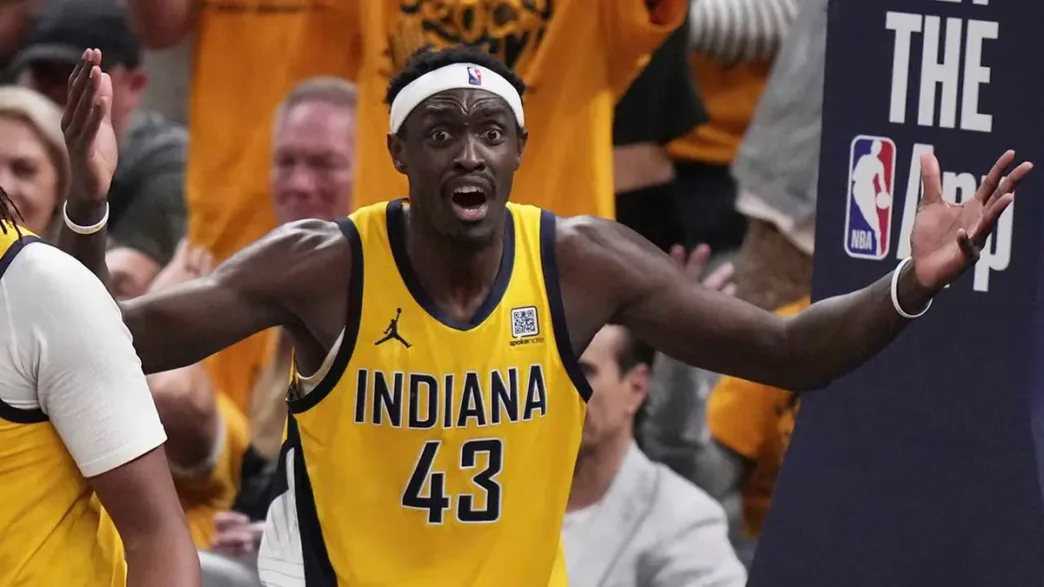
Indiana are a perfect example of how quickly things can slide. In that part of the standings, losing confidence can turn winnable games into losses that pile up.
The Detail That Separates Playoffs From Vacation: Defence in the Final Minutes
In the end, for many teams, the difference between making the playoffs and missing out won’t be offense, but the ability to defend in the last five minutes. Elite offenses exist everywhere, but very few teams can get three stops in a row when it truly matters. In the NBA, three straight defensive stops are worth more than any highlight.
The Real Race Starts Now: Who Rises and Who Breaks Between February and March
From this point forward, the season becomes a test of endurance. Contenders are chasing health and rhythm. Outsiders are searching for stability. Middle teams are trying to find identity. And the teams stuck in limbo risk being swallowed by the standings without even noticing.
That’s what makes this stage of the NBA so compelling: it’s not one night that changes everything, but several weeks. And when spring arrives, only the teams that can win in multiple ways, defend with credibility, and survive with a rotation that doesn’t break under pressure will still be standing.