






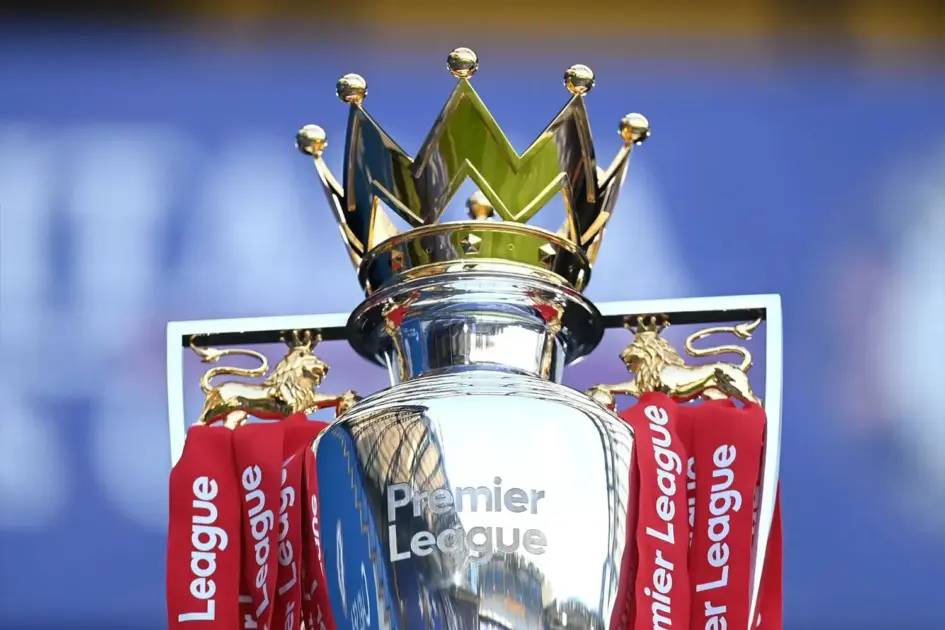
The odds on Arsenal to win the Premier League are high. But before you place your football bets, let’s take a look at the history that got the club where they are today.
Sundials and success
In late 1886, workers from Woolwich Arsenal Armament Factory formed a football team called Dial Square—after one of the factory’s workshops. The 15 men who pooled their resources to buy a football wanted to exercise and socialise. They had no idea what they had started.
Woolwich Arsenal
In 1891, the club turned professional. Later becoming known as Woolwich Arsenal in 1893. They successfully joined the Football League’s Second Division, making them London’s only professional club and the first south of Birmingham City to enter the league. They relocated to the Manor Ground that same year and began their league career on September 2, 1893, ultimately finishing a respectable ninth out of 15 teams with 28 points from 28 games.
Moving to Highbury
In 1913, Arsenal moved from Woolwich to Highbury, as chairman Henry Norris concluded that relocation was essential for the club’s survival and success. Despite its proximity to Tottenham, Norris was persuaded by the nearby underground station’s potential to attract large crowds and secured a 21-year lease. On April 26, 1913, the club became known as The Arsenal.
Securing top-flight membership
Arsenal’s intense rivalry with Tottenham Hotspur had started, and was further inflamed by a controversial 1919 decision that saw Arsenal elected to the expanded First Division despite finishing only sixth in the Second Division before World War I.
The great innovator
Henry Norris appointed Herbert Chapman from Huddersfield Town in the summer of 1925. Chapman immediately transformed the struggling club by securing a second-place finish and an FA Cup quarter-final in his first season—the highest league position in Arsenal’s history.
Though Arsenal lost their first FA Cup final 1-0 to Cardiff City in 1927, Chapman’s patient rebuilding transformed Arsenal into England’s dominant force by the early 1930s.
On October 31, 1932, Chapman successfully convinced London Underground to rename Gillespie Road station to “Arsenal”, making Arsenal the only London football club with its own Tube station.
Trophies and league titles
Chapman had promised upon his May 1925 arrival that building a winning team would take five years—he delivered exactly on schedule, launching Arsenal’s era of dominance. A year after their historic 1930 FA Cup triumph, Arsenal claimed their first league title.
After narrowly missing the double in 1932, Arsenal won their second title in 1933, wearing the iconic red shirts with white sleeves for the first time.
But in January 1934, Chapman died of pneumonia, aged 55. Despite this loss, Arsenal’s dominance continued under his successor, George Allison.
Arsenal claimed a second FA Cup in 1936 via Ted Drake’s strike against Sheffield United and secured their fifth league title in eight seasons in 1938, cementing their status as England’s premier club before World War II.
Arsenal in the war
Arsenal converted Highbury into an Air Raid Precautions (ARP) centre during World War Two after hosting Tottenham during the first conflict, but the stadium paid dearly.
Despite the turmoil, Arsenal dominated wartime football as they had the 1930s, winning the 1939/40 League South ‘A’ title before losing the 1940/41 League War Cup Final to Preston, then romping to the 1941/42 breakaway London League title with 108 goals in 30 matches, and capturing both the 1942/43 Football League South championship and League South Cup.
Allison retired that summer, and Tom Whittaker – the hugely respected club servant and England’s leading physiotherapist, now Secretary-Manager – immediately orchestrated Arsenal’s resurgence in 1947/48, reclaiming the championship by seven points over Manchester United at Old Trafford on January 17, 1948.
FA Cup triumph
A 2-0 victory over Liverpool on April 29, 1950, saw the club’s third FA Cup triumph.
Arsenal nearly achieved the Double in 1951/52 but finished four points behind Manchester United and lost the FA Cup Final to Newcastle, before claiming the 1952/53 title by the narrowest margin in history – 0.099 of a goal-on-goal average over Preston. This was Arsenal’s last trophy for 17 years.
Following Whittaker’s death in late 1956, successive managers Jack Crayston, George Swindin, and former England captain Billy Wright (appointed 1962) failed to revive former glories, though Wright signed Bob Wilson, Frank McLintock, and Joe Baker while the youth team won the 1966 FA Youth Cup, planting seeds for future success before former club physiotherapist Bertie Mee took over in 1966. Mee led Arsenal to successive League Cup Finals in 1968 and 1969, before achieving breakthrough glory in 1970.
The glory days
The confidence from Europe fuelled Arsenal’s legendary 1970/71 Double campaign. Monday, May 3, 1971, was something special as Mee’s side travelled to their local rivals for the season’s final match, knowing that victory or a scoreless draw would deliver the title to Highbury for the first time in 18 years.
Five days later, Mee’s men headed for Wembley with Liverpool standing between them and a feat which would later secure their places in history as only the second 20th-century side to complete the Double.
However, that sunny May afternoon victory marked the peak as the side lost the 1972 FA Cup Final to Leeds, finished second in 1972/73 despite Mee’s expensive Alan Ball signing, then slumped to 10th, 16th, and 17th over three seasons before Terry Neill took over in 1976.
Mee died in 2001, aged 82, leaving an enduring legacy among Arsenal greats for bringing glory back to Highbury.
The Wenger years
After short tenures for Stewart Houston and Bruce Rioch following George Graham’s departure, Arsenal found their long-term answer in relatively unknown Frenchman Arsène Wenger, who arrived in October 1996 as the club’s first non-UK manager. He immediately transformed the club both on and off the pitch through cutting-edge training regimes, dietary systems, and new signings.
Wenger’s finest signing, Thierry Henry, arrived in August 1999. After near-misses in the 2000 UEFA Cup and 2001 FA Cup finals, Arsenal later claimed another spectacular Double in 2001/02, followed by another FA Cup in 2002/03.
The Invincibles
Played 49, Won 36, drawn 13, lost none—Arsenal’s squad that set a new unbeaten league record between May 2003 and October 2004 will live forever in history.
Arsenal matched Nottingham Forest’s 26-year-old record of 42 unbeaten games on August 22, 2004, then broke it three days later against Blackburn at Highbury, extending the record to 49 games before a controversial, harshly awarded penalty ended the run in a 2-0 defeat at Old Trafford in October 2004. But nothing could dim Wenger’s ‘Invincibles’ achievement.
To the Emirates
On May 7, 2006, Arsenal bid farewell to Highbury and moved to the Emirates Stadium after 93 years, securing the fourth and final Champions League place.
Arsenal reached the 2006 Champions League Final in Paris. However, after nine years without a trophy, serious pressure mounted on Arsenal as they arrived at Wembley for the 2014 FA Cup final against Hull City, where they secured Arsenal’s record 12th FA Cup triumph.
–Now, the 2026 Premier League betting odds seem to be in Arsenal’s favour, with fans’ anticipation building as we head into the final few months of the season.